Tulsa metro · Southeast growth belt
Foundation Repair in Broken Arrow, OK
Broken Arrow has expanded outward in rings, and you can read that history in its foundation complaints. The older core near Main Street includes crawl space homes. The broad middle band of 1980s and 1990s brick ranches is almost entirely slab. The newest neighborhoods to the south and east sit on recently graded ground.
Nearly every call from this city starts with the same sentence: there's a crack in the brick, and it looks like stairs.
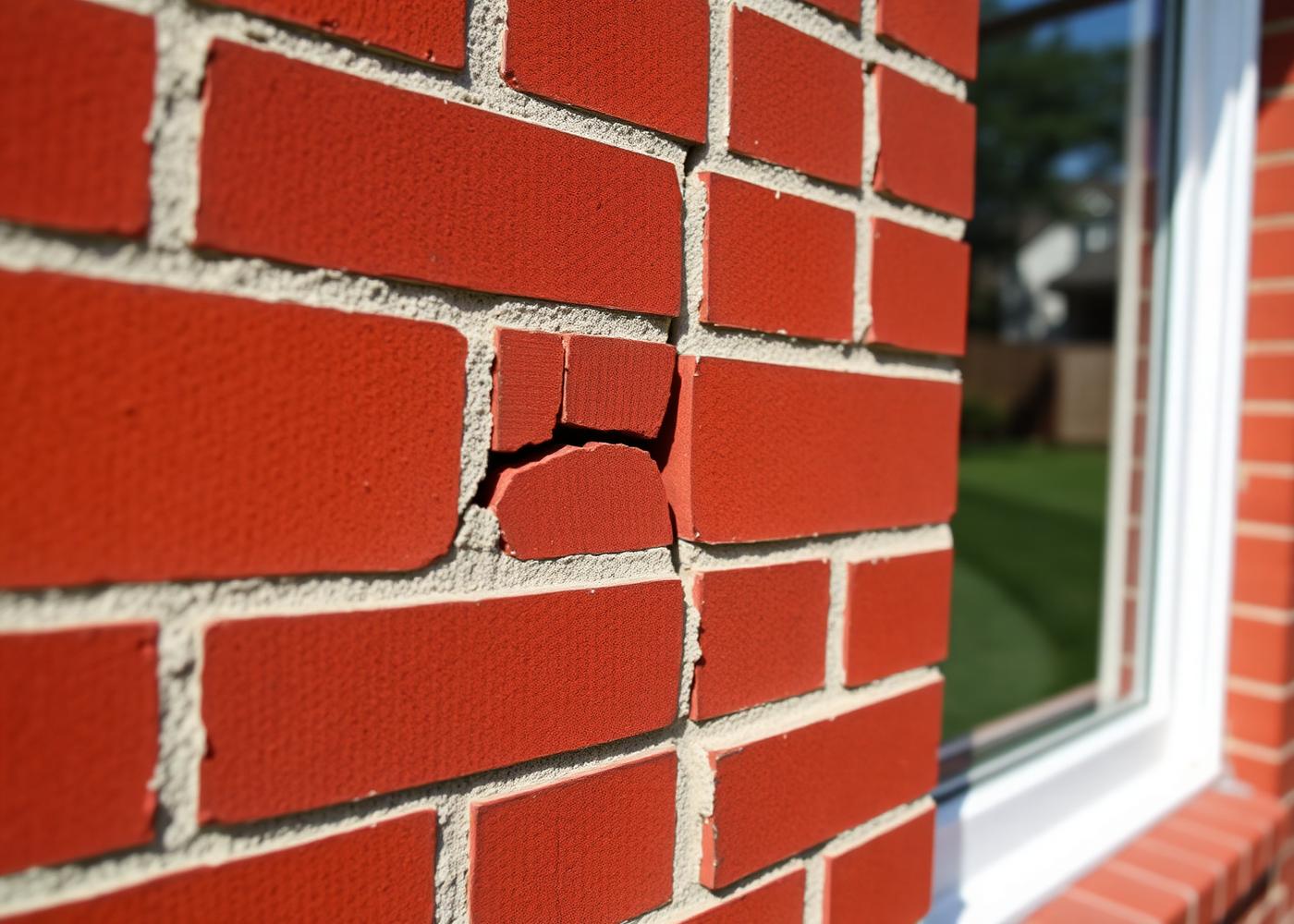
Reading a stair-step crack
Masonry can't stretch. When the foundation under one section of wall drops relative to its neighbor, the brick has to fail somewhere, and it fails along mortar joints — across, up, across, up. That staircase pattern points toward the low side: the crack generally widens in the direction the wall is moving away from.
What it doesn't tell you is magnitude. A dramatic-looking crack can accompany a half-inch of movement, and a hairline can accompany more. That's why an evaluation involves floor elevations rather than a photograph verdict, and why crack repair is a finishing step rather than a diagnosis.
Local conditions worth noting
This side of the Tulsa metro receives substantial rainfall, and clay soils here hold it. Long saturated stretches followed by a hard July drying trend put brick veneer through real cycling. Lots with minimal fall away from the slab, or with a patio poured level with the top of the foundation, keep water where it does the most harm.
- Cracks concentrated on the sunniest exposure of the house
- Separation above and below a window on a garage-side wall
- Patio slab that has tilted back toward the house
- An interior door pair that no longer meets evenly at the top
Not sure if it's active?
An elevation survey plus dated crack photos settles the question without committing you to repairs.
Method shortlist
- Steel push piers — the standard for a settled slab perimeter with enough structural weight above.
- Helical piers — for porches, patio covers, and additions too light to drive a push pier.
- Slab repair — the overall picture of how settled slabs get stabilized.
Practical sequence
What a Broken Arrow homeowner should do this month
None of this costs money, and all of it makes the eventual conversation with a contractor more productive.
Mark and date
Pencil lines at each crack end, photo with today's date in frame.
Walk the perimeter
Look for soil pulled away from the slab and for negative grade.
Check the gutters
Every downspout should discharge several feet from the wall.
Test the doors
Note which ones bind now — that list changes with the seasons.
Broken Arrow
Have the crack looked at properly
Crews covering Broken Arrow generally work the whole east side of the metro, including Tulsa.
Broken Arrow foundation questions
How fast should I act on a stair-step crack in brick?
Days don't matter; seasons do. Mark the ends of the crack, photograph it, and note the date. If it lengthens or widens over the following months, you have an active condition. If it holds steady through a full wet-dry cycle, the urgency drops considerably.
Is brick veneer cracking a structural problem by itself?
Brick veneer is a cladding hung on the frame, not the thing holding your house up. It cracks because whatever it's attached to moved. So the crack is evidence, not the failure — which is why diagnosing from crack appearance alone is unreliable.
Do Broken Arrow's newer additions have fewer problems?
Newer subdivisions benefit from modern grading and drainage requirements, which helps. They're still built on the same expansive clay, and they're often on graded fill, so settlement calls in ten-year-old neighborhoods are not unusual.
Can piers be installed without tearing up the driveway?
In most cases, yes — piers go in along the foundation perimeter or through interior floors, and crews route around hardscape where possible. Where a pier location falls under concrete flatwork, that section may need to be cut and patched. Get it identified in the proposal.