East metro · Post-war housing
Foundation Repair in Midwest City, OK
Midwest City was built quickly and at scale in the years after World War II, and much of that original housing is still occupied and still on its original foundations. Seventy years of Oklahoma wet-dry cycling is a long test, and the houses that show damage usually show it at predictable places: additions, converted garages, and enclosed porches.
The useful question in this city is rarely "is there a crack." It's whether the movement behind it is still happening.
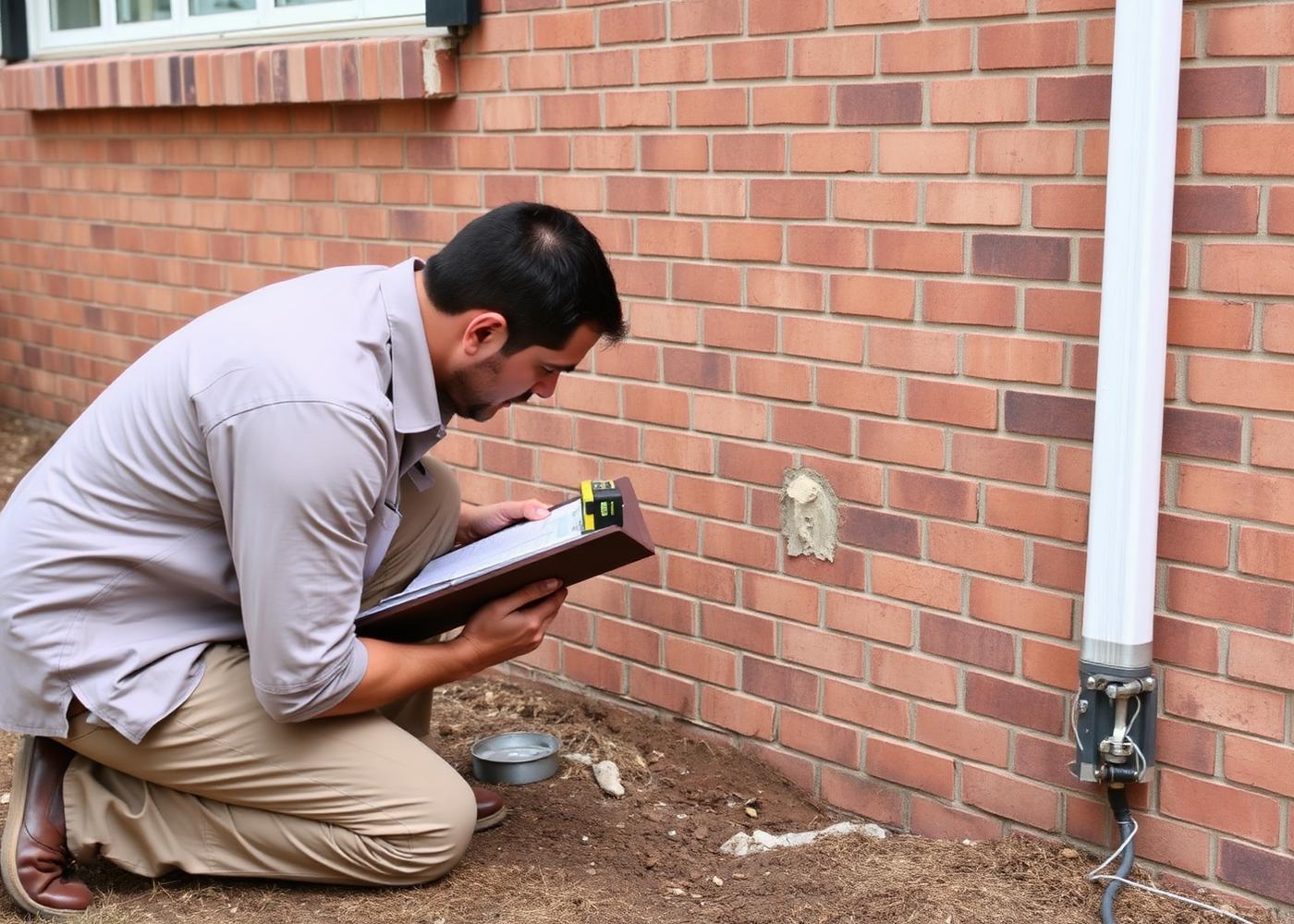
Active vs. dormant movement
An older house carries a record of everything that has happened to it. Patched cracks, doors planed at the corner, a hallway that has been out of level since the Carter administration — none of that necessarily means anything is moving today. Repair decisions should be based on current behavior, not accumulated history.
The way to tell is measurement over time: elevation readings, dated crack photographs, and pencil marks at crack ends. A contractor who insists on immediate piers without establishing whether the condition is active is skipping the part that determines whether you need to spend the money at all.
Where damage concentrates
- The joint between the original house and a rear addition
- Converted garages where the slab was poured at a different time and depth
- Enclosed carports and screened porches on shallow footings
- Chimneys on their own footing, leaning slightly away from the wall
- Old cast iron drain lines under slabs, leaking and feeding the soil
Lighter attached structures are exactly the case helical piers were made for, since there isn't enough weight above to drive a push pier. Where the main house has genuinely dropped, the conversation moves to slab stabilization.
Old house, old crack, new worry?
An inspection that establishes whether the movement is active is the cheapest step available.
Questions to ask any contractor
- 1. What elevation differences did you measure, and where?
- 2. How many piers, at what spacing, and to what refusal criteria?
- 3. Are you lifting or stabilizing, and what's the target?
- 4. What is restored afterward — soil, concrete, landscaping, finishes?
- 5. What exactly does the warranty transfer to a future buyer?
Midwest City & Del City area
Request an inspection
East metro contractors typically cover this area alongside Oklahoma City and Moore.
Midwest City foundation questions
Our house is from the early 1950s. Are the footings shallow?
Post-war construction in this area was built to the standards of its day, which generally means less footing depth and less reinforcement than a modern slab. It doesn't mean the house is failing — plenty are fine seventy years on — but it does mean soil movement translates to the structure more directly.
Half our house is original and half is an addition. Why does damage concentrate at the seam?
Two structures poured decades apart rarely share footing depth, soil preparation, or load. They move independently, and the joint between them has to absorb the difference. Repairs frequently focus on supporting the newer, lighter portion.
We've had the same crack for twenty years. Does it need repair?
A crack that has held the same length and width across many wet and dry cycles is behaving like a stable joint. Documenting it and sealing it is often reasonable. What changes the calculation is any recent growth or a new elevation difference across it.
Can foundation repair be phased over time?
Sometimes. If one wall is clearly the problem, addressing that section first is defensible. Ask the contractor to state plainly what phasing leaves unaddressed, and whether partial work affects any warranty.