Tulsa County · Crawl space country
Foundation Repair in Tulsa, OK
Tulsa's foundation problems read differently than the rest of the state. A big share of the city was framed before slab-on-grade took over, which means the call is often about a floor that bounces or dips rather than a cracked concrete edge. Add hillside lots and heavy storm runoff and you get moisture doing as much damage as soil movement.
Newer construction on the south and east sides behaves more conventionally — clay soil, dry summer, settled perimeter.
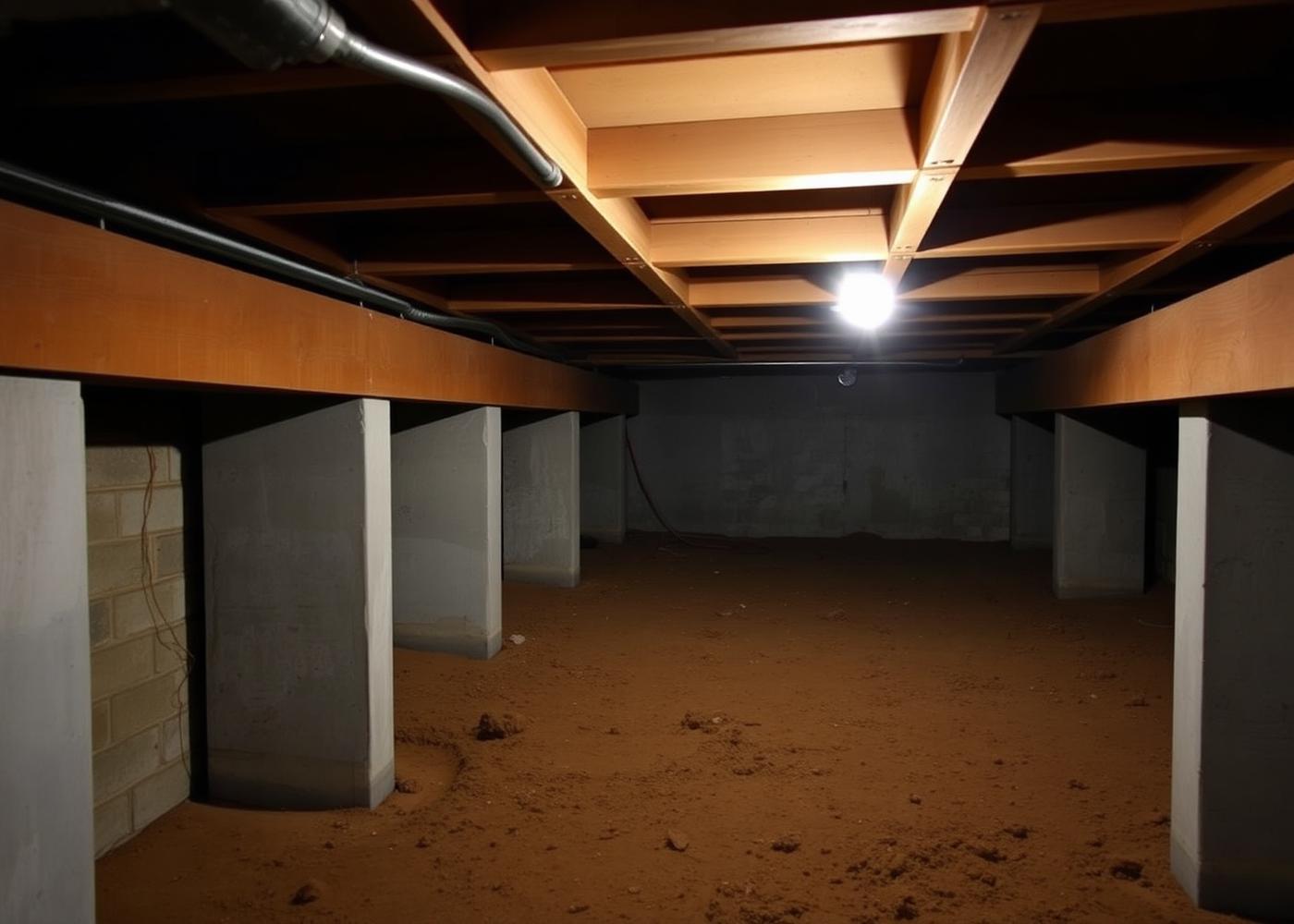
Fig. — Sagging beam span with an added interior support
Two Tulsas, two failure patterns
In midtown — think the neighborhoods threaded around Peoria and Utica — the structure is wood over a crawl space. Original cedar or pine posts sat on shallow pads, and after eighty years of wet-dry cycling some of them have settled, split, or rotted at the base. The floor telegraphs it long before anything cracks: a dip in a hallway, a springy spot in the kitchen, baseboard pulling away from the floor.
South of 61st and out toward Broken Arrow the housing is slab. There the pattern is familiar statewide behavior: clay drying back from the perimeter through August, corners dropping unevenly, and hairline drywall cracks reopening at the same door headers each year.
Drainage does real damage here
Tulsa gets more annual rainfall than western Oklahoma, and slope carries that water toward houses on plenty of lots. Downspouts dumping at the corner of a foundation, negative grade against a brick wall, and crawl space vents below the surrounding dirt all keep the soil in a cycle it never gets out of. A repair plan that ignores water is a repair plan you get to buy twice.
Moisture control belongs in the same conversation as crawl space re-support, and a foundation inspection should include what happens to roof water once it hits the ground.
Floor dipping in one room?
Localized sag in a crawl space home is usually a support problem, not a whole-house failure.
How a Tulsa crawl space repair typically unfolds
- STEP 01
Elevation survey
Floor heights are recorded room by room so the low spots and their extent are documented, not eyeballed.
- STEP 02
Crawl entry
Beams, posts, pads, sill plates, and moisture conditions get inspected from underneath.
- STEP 03
Support work
Failed posts are replaced, spans get intermediate supports, and elevations come up in stages.
- STEP 04
Water correction
Grading, gutter discharge, and vapor issues get addressed so the same cycle doesn't restart.
Tulsa metro
Talk it through with someone who works Tulsa houses
Crawl space work and slab underpinning call for different crews and different equipment. Describe what you're seeing and we'll match the request accordingly. Broken Arrow homeowners are covered under the same referral area.
Tulsa foundation questions
Is Tulsa soil different from Oklahoma City soil?
Both metros deal with expansive clay, but Tulsa's terrain has more relief and more variation in fill. Hillside lots in the midtown and south Tulsa areas can bring drainage and slope-related loading into the picture on top of ordinary shrink-swell behavior.
Why do so many Tulsa homes have crawl spaces?
Tulsa's building boom in the 1920s through 1950s predates the slab-on-grade standard, so a large share of midtown housing sits on pier and beam framing. That system is easier to adjust than a slab, but it introduces wood, moisture, and ventilation as variables.
There's standing water in my crawl space after storms. Does that cause settlement?
It contributes to two separate problems. Saturated soil under interior piers can lose bearing capacity, and persistent humidity attacks the wood carrying your floor. Correcting grade, gutters, and downspout discharge is usually part of any lasting repair.
Can a sloping floor in an older Tulsa home be corrected without gutting it?
Often, yes. Adjustable supports under a crawl space let a crew raise a sagging span gradually over multiple visits. Plaster walls and old tile need that slower approach, and the goal is a floor within tolerance rather than laser-flat.