Method · Screw pile system
Helical Pier Installation in Oklahoma
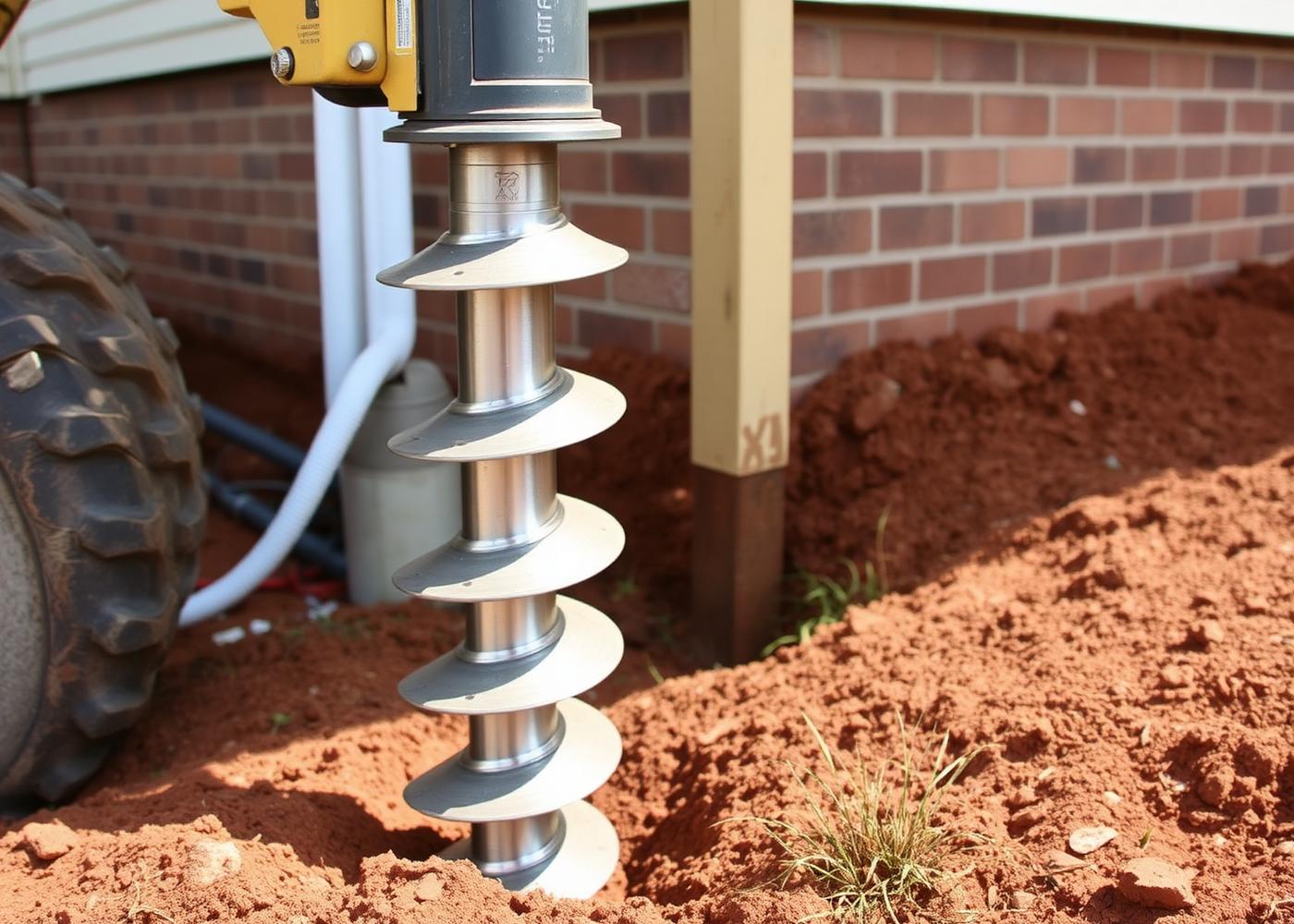
A helical pier is a steel shaft with one or more helix plates welded to it — essentially a large screw. Hydraulic equipment rotates it into the ground, and the plates pull it down until the shaft reaches soil capable of carrying the design load. Nothing gets pushed, so the weight of the structure above is irrelevant to installation.
That single difference is what makes helicals the answer for the structures push piers can't handle.
- Installed by
- Rotation / torque
- Capacity check
- Torque correlation
- Best for
- Light structures
- Access
- Tight spaces OK
How the system works
The lead section carries the helix plates; extensions are added as the pier advances. Throughout installation the equipment reports the torque required to keep turning, and that resistance is the measurement installers watch. Once the pier is seated at the specified torque and depth, a bracket connects it to the footing, slab edge, or beam it will support.
Because the pier is developing capacity in the soil rather than relying on being pressed downward, it can be installed under a porch column just as readily as under a two-story wall.
Installation, step by step
- 1. Locate piers per the repair plan and expose the bearing point.
- 2. Advance the lead section with a hydraulic drive head, logging torque.
- 3. Add extensions until the target torque and depth are achieved.
- 4. Fit the bracket and transfer load, lifting if the scope calls for it.
- 5. Backfill and restore the work area.
Where helical piers get specified
- Room additions and enclosed patios that settled apart from the main house
- Front porches, stoops, and covered patio columns
- Converted garages and sunrooms on shallow footings
- Crawl space interiors where equipment access is restricted
- Chimney footings that have tilted away from the wall
- New decks, additions, and light commercial pads at build time
Those first three categories cover most of what we hear about in Midwest City and older Oklahoma City neighborhoods, where additions were built onto houses decades after the original construction.
Stabilization and lift
Once seated, helical piers can hold a structure at its current elevation or serve as the reaction point for controlled lifting. On lighter structures lift tends to be more predictable than on a full masonry wall, simply because there's less mass and less rigid cladding to fight.
Addition settling away from the house?
That seam is the single most common helical pier scenario in Oklahoma homes.
Compared with push piers
Push piers use the building's weight to drive pipe to refusal and suit heavy masonry homes with settled perimeters. Helicals are torqued in, need no structural reaction load, and fit where access is tight. Neither is universally better — the structure and the soil decide.
Read the steel push pier method →Choosing between them
A rough decision guide
Any real specification comes from an on-site assessment. This is the shorthand contractors tend to use.
Lean helical when…
- The structure is light — porch, addition, deck, sunroom
- Access is tight or work has to happen inside a crawl space
- An engineer wants installed capacity documented by torque
- Piers are going in during new construction
Lean push pier when…
- A heavy brick or masonry wall has settled
- There's ample dead load above the bracket
- Exterior excavation along the wall is straightforward
- Depth to competent bearing is uncertain and refusal-driven depth is preferred
Statewide
Check whether helicals fit your situation
Describe the structure that's moving — the whole house, or a specific addition or porch. That detail alone narrows the method considerably.
Helical pier questions
Why is torque important on a helical pier?
The rotational resistance recorded during installation correlates with the pier's capacity in that soil. It gives the installer a real-time measurement rather than an assumption, which is one reason engineers often specify helicals where documented capacity is required.
Are helical piers weaker than push piers?
No. Capacity depends on the shaft, the helix configuration, and the soil it's seated in, not on which installation method was used. Systems are selected to meet the load a given location has to carry.
Can helical piers be installed in tight spaces?
That's one of their advantages. Compact hydraulic drive equipment fits into crawl spaces, interior rooms, and narrow side yards where a full excavation crew can't operate comfortably.
Do they work in Oklahoma clay?
Yes, and clay is a common medium for them. The pier is advanced through the seasonally active zone into deeper material, where the helix plates develop bearing. Site-specific conditions still govern the design.
Are helical piers used for new construction?
Frequently — for deck footings, room additions, porch columns, and light commercial pads where shallow footings would be at risk. Installing them at build time is usually cheaper than retrofitting later.