Cleveland County
Foundation Repair in Norman, OK
Norman has an unusually mixed housing stock for a city its size: 1920s frame houses near campus, sprawling 1970s and 1980s slab additions, newer construction pushing east toward Lake Thunderbird, and a heavy concentration of rental property in between. Foundation questions here often arrive attached to a transaction — a purchase inspection, a lease turnover, an appraisal note.
The underlying soil behavior is the same shrink-swell clay that troubles the rest of central Oklahoma.
- County
- Cleveland
- Housing mix
- Frame, slab, rental
- Frequent driver
- Poor lot drainage
- Typical request
- Transaction-related
What moves houses in Norman
Flat lots and clay subsoil make water the deciding factor. When a yard has no fall away from the house, storm runoff sits against the foundation for hours, saturating the soil on one side while the other side keeps drying. Repeat that for a decade and one wall has experienced a completely different moisture history than its neighbor.
The second factor is age of construction. Houses framed in the twenties and thirties near campus have shallow footings by modern standards, and many have been remodeled two or three times, with additions that don't share the original footing depth. Those seams are where cracking concentrates.
Symptoms Norman homeowners describe
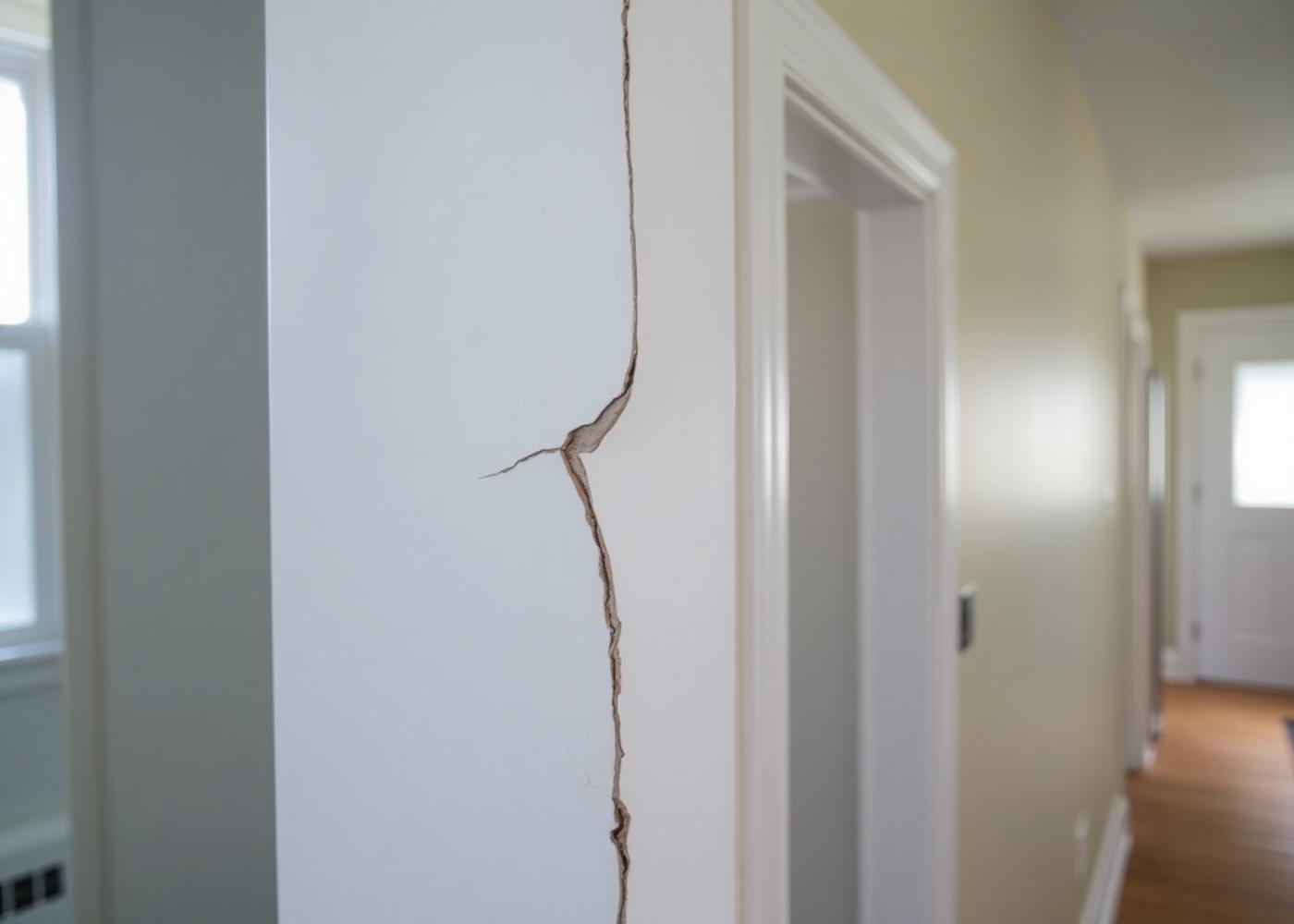
- A hallway that visibly falls away from the front of the house
- Cracked grout lines in a bathroom added onto the back of an older home
- Windows in a converted garage that no longer sit square in their openings
- Exterior mortar cracking near a downspout that has always dumped at the corner
- Interior doors trimmed at the bottom by a previous owner to make them close
That last one is worth flagging. Doors planed to fit are a record of past movement. If they've since gone loose in the frame, the house has moved back — a strong signal that you're dealing with seasonal soil cycling rather than a one-time failure. Read more in the foundation warning signs guide.
Where to go next
Repairs that come up most on Norman houses
Because so many Norman calls involve older framing plus later additions, the fix is frequently a combination rather than a single method.
House leveling
Correcting the slope you can feel walking down a hallway, staged to protect plaster and tile.
Helical piers
Common under additions, porches, and converted garages that settled apart from the main structure.
Foundation inspection
Elevation readings and drainage review — the documentation a real estate negotiation needs.
Norman & Cleveland County
Get numbers on it
Whether you're under contract or just tired of a sticking door, an on-site assessment turns guesswork into measurements. Coverage extends north to Moore and Oklahoma City.
Questions from Norman homeowners and landlords
I'm buying a house near campus and the inspector flagged floor slope. Now what?
A general home inspector notes the symptom; they rarely quantify it. The useful next step is an elevation survey that puts numbers on the slope and a look at whether the framing or the soil is responsible. That documentation is also what lets you negotiate on a real figure instead of a fear.
Are rental properties treated differently?
The engineering is identical, but scheduling and occupancy change the plan. Interior slab piers mean opening floors, which landlords usually push to a turnover window. Exterior perimeter work can often proceed with tenants in place.
Do drainage improvements alone ever solve the problem?
Sometimes, when movement is early and driven by one bad water path — a downspout discharging beside a corner, for instance. Correcting that and monitoring elevations over a season is a legitimate approach before committing to piers.
How much does an evaluation in Norman cost?
Many Oklahoma foundation contractors provide an initial on-site assessment and repair proposal at no charge. A stamped engineering report is a separate paid service, and worth it for real estate transactions or contested claims.