Service · Crawl space structures
Pier & Beam Foundation Repair in Oklahoma
A pier and beam house carries its floor on wooden beams supported by piers, with a crawl space in between. It's the system under most Oklahoma homes built before the 1960s, and it behaves nothing like a slab: symptoms arrive underfoot rather than in the concrete, and the material doing the failing is often wood, not soil.
The upside is real. These foundations are accessible and adjustable, which makes precise correction possible without demolition.
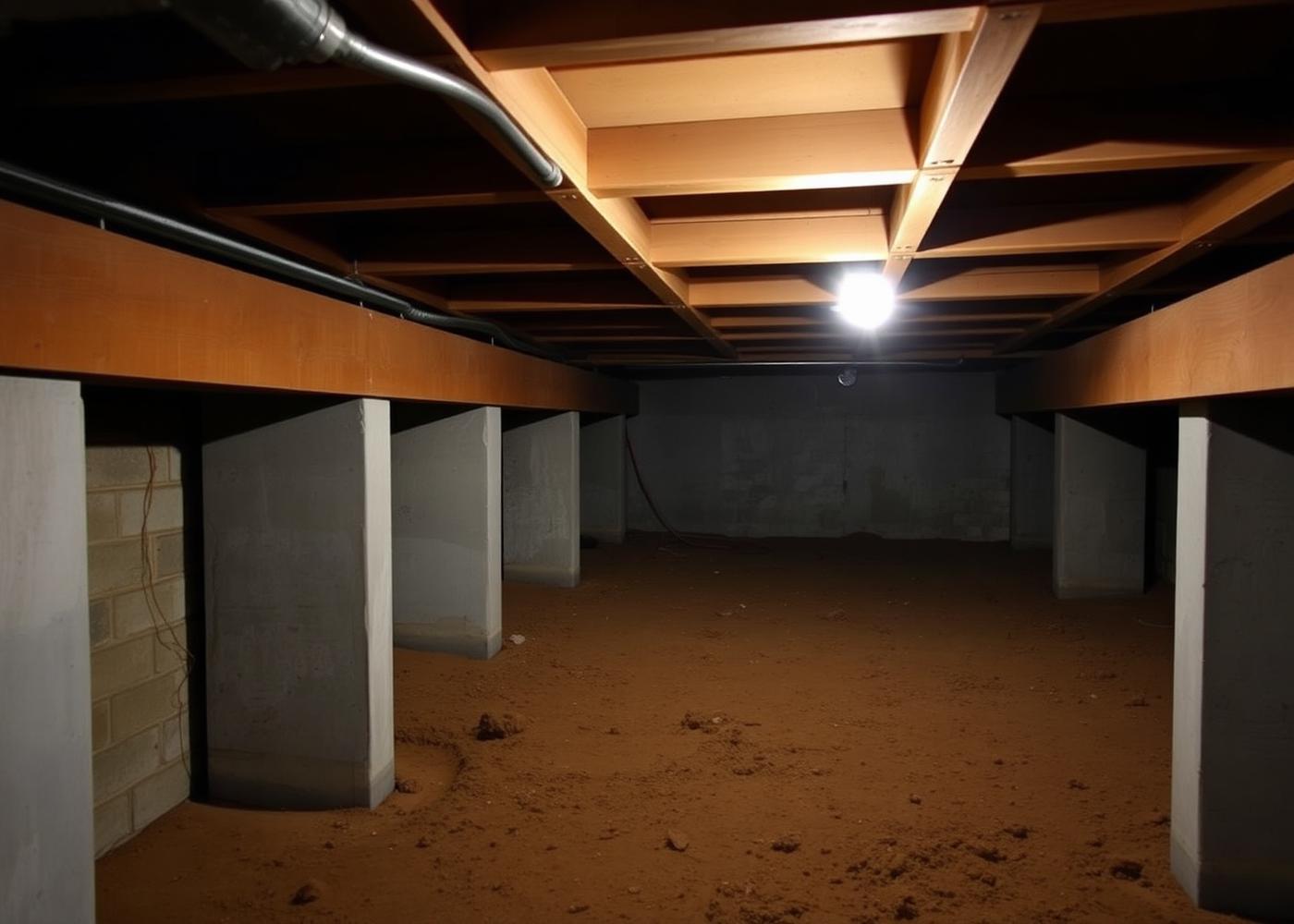
Fig. — Beam sag between original piers, corrected with an added support
What actually goes wrong down there
Sagging floors
The most common complaint. A beam spanning too far between supports deflects over decades, and the floor above it follows. Remodels make it worse: removing an interior wall that was quietly carrying load transfers that weight onto framing never sized for it.
Shifting and settled piers
Original piers frequently sit on shallow pads. When the clay beneath a pad shrinks through an Oklahoma summer, the pier settles and the beam it carries drops with it. Because piers act independently, one settling in the middle of a house creates a localized dip rather than a whole-house tilt.
Damaged supports
Wood in contact with damp soil eventually loses. Posts crush at the bearing end, sill plates soften, and beam ends deteriorate where they meet masonry. Insect damage often follows the moisture.
Crawl space moisture
Everything above interacts with water. A crawl space that stays damp accelerates decay in the framing while softening the soil under the pads. That's why correcting grade, gutters, and ground vapor is part of a durable repair rather than an upsell.
How the repair is carried out
Work happens from below. Temporary support takes the load, the failed component gets replaced or reinforced, and elevations come up in controlled increments — often across more than one visit so the structure can adjust. Where original piers are inadequate, new piers or helical piers may be installed to reach more reliable bearing.
If the floor slope is the main complaint rather than a specific failure, the scope becomes house leveling.
Musty smell plus a dipping floor?
Those two symptoms usually share a cause. Have the crawl space looked at as a system.
Sequence
A typical pier & beam repair, start to finish
- STEP 01
Measure and map
Elevations recorded room to room so the low areas and their boundaries are documented.
- STEP 02
Inspect from below
Beams, posts, pads, joists, sill plates, moisture, and insect damage assessed in the crawl space.
- STEP 03
Support and correct
Temporary shoring, then replacement or reinforcement of failed components and added supports where spans need them.
- STEP 04
Raise in stages
Elevations brought up gradually toward tolerance, with drainage and vapor issues corrected so the cycle doesn't repeat.
Older Oklahoma homes
Talk through what your floors are doing
Crawl space work is most common in Tulsa and the older parts of Oklahoma City, with crews available in Lawton as well.
Pier & beam questions
Why does my floor feel bouncy in one room?
Deflection usually points to span rather than settlement — a beam or joist carrying more distance than it comfortably can, sometimes after a wall was removed during a remodel. Adding an intermediate support under that span is a straightforward fix compared with underpinning.
Do rotted posts have to be replaced entirely?
If the bearing end has deteriorated, yes. Sistering or shimming a rotted post preserves the problem. Replacement with treated material on a proper pad, plus correcting whatever kept it wet, is what makes it last.
Is a vapor barrier worth installing in an Oklahoma crawl space?
Ground moisture evaporating into a crawl space is a major driver of wood decay and musty indoor air. A ground vapor retarder plus corrected drainage addresses the source. Whether to go further into full encapsulation depends on the specific crawl space.
How level should an old pier and beam floor be?
Perfectly flat isn't the goal and isn't achievable on a house that has been standing for eighty years. Crews work toward bringing elevations within a reasonable tolerance while avoiding new cracking in plaster and tile.
Can pier and beam work be done while we live in the house?
Usually yes, since most of the work happens underneath. Expect noise, some dust around access points, and doors or windows needing adjustment afterward as the framing settles into its new position.