Resource · Symptom guide
Signs of Foundation Problems in Oklahoma Homes
Oklahoma houses move. Expansive clay swells with autumn rain and shrinks through August heat, and most homes here show some evidence of that cycle without being in trouble. The useful question isn't whether you have symptoms — it's whether they're getting worse.
Use this as a checklist for what to look at, and the monitoring section below to figure out what your findings mean.
Checklist
What to walk your house looking for
Count how many you find and in how many places. A single symptom in one corner is a different picture than eight symptoms clustered along one wall.
Interior signs
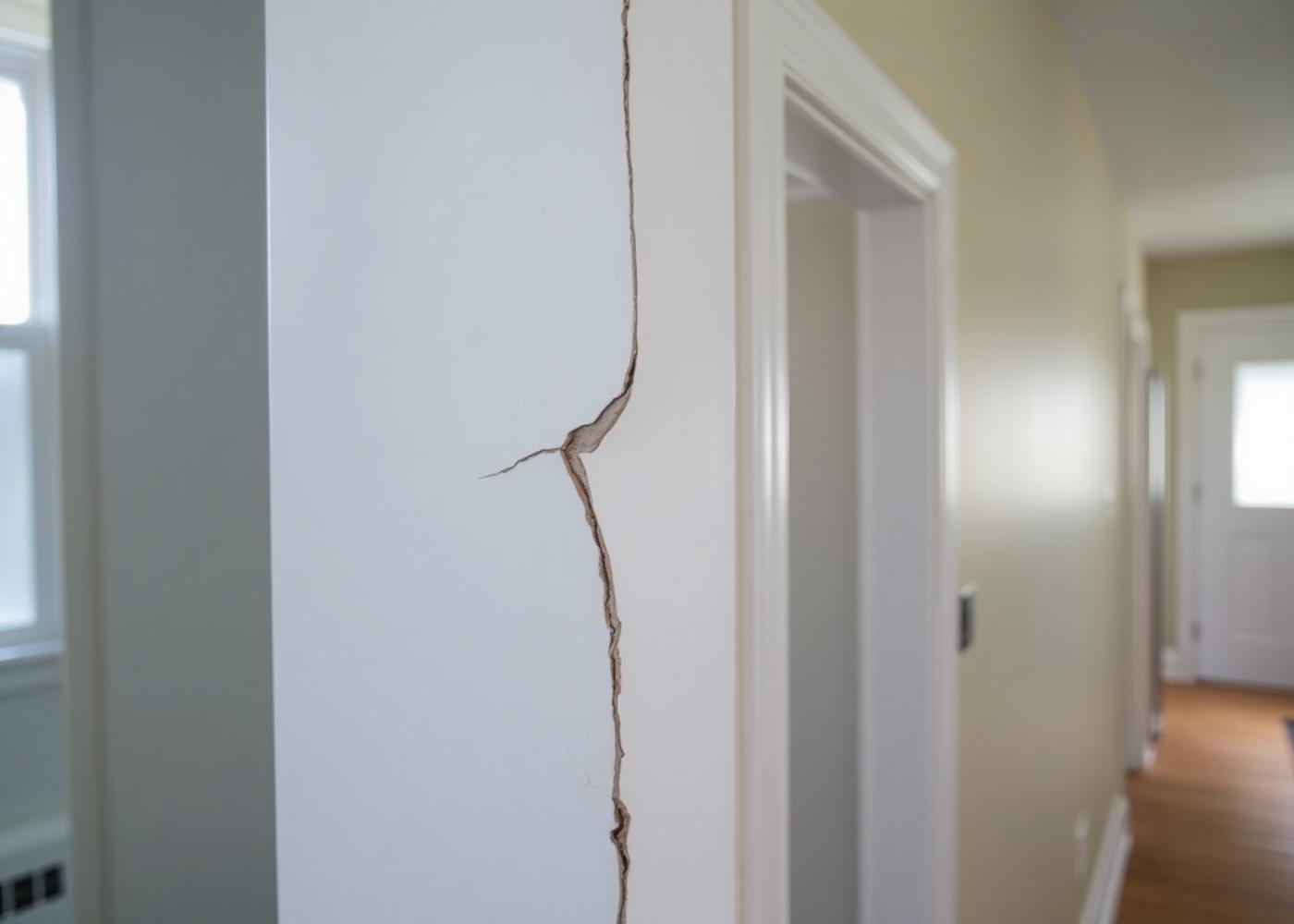
- Diagonal cracks radiating from door and window corners
- Doors that stick, drag on the jamb, or swing open on their own
- Windows that bind or won't latch the way they used to
- Baseboard or crown molding separating from wall or ceiling
- Floors that feel noticeably sloped or bouncy underfoot
- Cracked or loose floor tile, split grout lines in a straight run
- Gaps opening above cabinets or countertops
- Nail pops and seam cracks reappearing after being patched
Exterior signs
- Stair-step cracking through brick mortar joints
- Visible cracks in the exposed slab edge or stem wall
- Gaps between brick and window or door trim
- A wall that reads out of plumb or bowed when sighted along it
- Chimney leaning away from the wall or a gap at the flashing
- Separation between a porch, stoop, or patio and the house
- Garage door panel no longer meeting the slab evenly
- Concrete walkways or driveway slabs tilting toward the house
Crawl space signs
- Standing water, damp soil, or a persistent musty odor
- Piers that are out of plumb, cracked, or no longer bearing
- Shims that have fallen out or crushed under load
- Sagging beams or visible deflection in floor joists
- Rot or insect damage at beam ends and sill plates
- Daylight visible at the perimeter where it shouldn't be
Site and water signs
- Grade sloping toward the house rather than away
- Downspouts discharging within a couple feet of the wall
- Areas beside the foundation that stay wet for days
- Deep soil separation cracks along the foundation in late summer
- Large trees within canopy distance of the slab
- Unexplained water bill increase, or a warm spot on the slab
Active movement vs. old, settled history
This is the distinction that determines whether you need repair or reassurance. Damage that occurred fifteen years ago and stopped looks identical in a photograph to damage that's progressing right now. Only time-separated observations tell them apart.
A monitoring method that costs nothing
- 1. Photograph each crack with a coin or tape measure in frame for scale.
- 2. Pencil a small tick at each crack end and write the date beside it.
- 3. Record the widest point in millimetres in a note on your phone.
- 4. Test every sticking door and note which ones bind and where.
- 5. Repeat all of it after a seasonal swing — say late summer, then mid-spring.
If nothing changed, you have real evidence the house is stable. If cracks lengthened past your marks or new symptoms appeared, you have evidence worth showing a professional. Either way, you know more than a single visit could tell you.
Symptoms that justify moving faster
- Noticeable change over weeks rather than seasons
- A door or window that has become unusable
- Horizontal cracking in a wall that retains soil
- New water entering a crawl space or through a slab crack
- Visible offset — one side of a crack sitting higher than the other
- A chimney that has separated from the wall
Common causes that aren't structural at all
- Drywall seam cracking from framing shrinkage in a newer home
- Door binding from humidity swings between seasons
- Curing shrinkage cracks in concrete, typically fine and vertical
- Tile failure from a poor underlayment or missing expansion joint
- Localized floor dips from a remodel or a replaced subfloor
Which is why measurement precedes diagnosis. The inspection page covers what that involves, and the clay soil guide explains the mechanism behind the seasonal pattern.
Found several symptoms on one wall?
Clustering along a single wall or corner is the pattern most worth having measured.
Rule this out first
A leaking water or sewer line beneath a slab can saturate soil in one area and cause movement that looks exactly like soil-driven settlement. Repairing the structure without finding the leak means doing it twice. If your water bill jumped or one area of slab stays damp, say so early.
Warning sign questions
Which sign is the most reliable indicator?
A crack that measurably grows over months, combined with elevation readings showing the floor out of plane. Any single static symptom is weak evidence on its own.
Do cracks that open and close with the seasons mean trouble?
Seasonal movement is extremely common in Oklahoma clay and often stays within a range the house tolerates indefinitely. The concern is a trend — cracks that widen each year without returning.
How fast should I act?
Sudden changes over weeks, doors becoming unusable, or new water intrusion warrant prompt evaluation. Symptoms that have looked the same for five years usually allow time to document and think.
Could a plumbing leak be causing all of this?
Yes, and it's underdiagnosed. A leaking supply or drain line under a slab can saturate soil locally and produce settlement or heave. It should be ruled out before structural repair, because fixing the structure without fixing the leak invites a repeat.
Is a sloping floor always a foundation problem?
No. Older homes were built with tolerances, framing shrinks and deflects, and floors get overlaid during remodels. Elevation readings across the whole floor distinguish a genuine plane shift from a localized dip.